




Service Categories
.jpeg)
Korean Brightening Facial Treatment
$ 225.00
Core Benefits
Delivers a radiant, hydrated "glass skin" glow
Evens skin tone and fades dark spots
Smooths overall skin texture
How It Brightens
Exfoliates: Strips away dulling dead skin cells.
Blocks Melanin: Stops dark spot production at the source.
Boosts Cell Turnover: Speeds up skin regeneration and circulation.
Plumps with Hydration: Allows skin to reflect light more evenly.
The 5-Step Treatment
Cleanse: Clears surface impurities.
Cold Plasma: Increases skin absorption by 24%.
Pigment Balancing Peel: Smooths texture and reduces hyperpigmentation.
Vitamin C Ampoule + Ultrasound: Penetrates deep to brighten and protect.
Mela-Toning Mask + Galvanic Current: Uses electrical current to push restorative ingredients into the skin.
Key Ingredients & What They Do
Vitamin C, Arbutin & Tranexamic Acid: Fade dark spots and block excess pigment production.
Edelweiss Callus & Soybean Phytoplacenta: Provide strong antioxidant defense, soothe inflammation, and support skin recovery.
Rhodiola Rosea: Shield skin against environmental stressors.
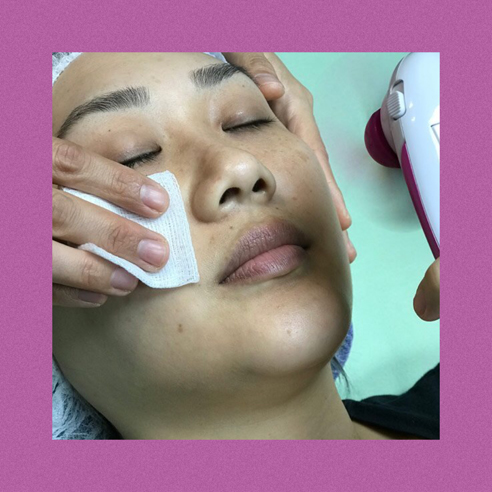
Hyperpigmentation Chemical Peels
$ 125.00
Core Benefits
Smooths Tone & Texture: Instantly removes dead cell buildup to reveal a brighter, softer complexion.
Fades Spots & Sun Damage: Highly effective against hyperpigmentation, age spots, and melasma.
Treats Acne & Scars: Unclogs pores, reduces active inflammation, and fades post-acne marks.
Smooths Fine Lines: Boosts collagen and elastin production to soften wrinkles over time.
How Chemical Peels Work
Dissolves Bonds: Chemical solutions (AHAs, BHAs, TCA) loosen the "glue" holding dead skin cells together.
Controlled Exfoliation: Strips away damaged outer layers of skin.
Regenerates Skin: Triggers cell turnover and new collagen production as the skin heals.
Types of Peels By Depth
Superficial (Mild): Exfoliates the outermost skin layer using gentle acids (Glycolic, Salicylic). Excellent for a quick refresh with minimal to no downtime. (Performed frequently)
Medium (Moderate): Reaches the upper dermis using stronger acids (TCA) for deeper lines and pigmentation. Requires up to a week or more of downtime. (Performed less often) - We don't do this peel and will refer you to a dermatologist office.
Deep (Aggressive): Penetrates deep into the dermis using phenol for severe concerns. Requires significant recovery time, done only once, and must be performed in a physician's office. - We don't do this peel and will refer you to a dermatologist office.
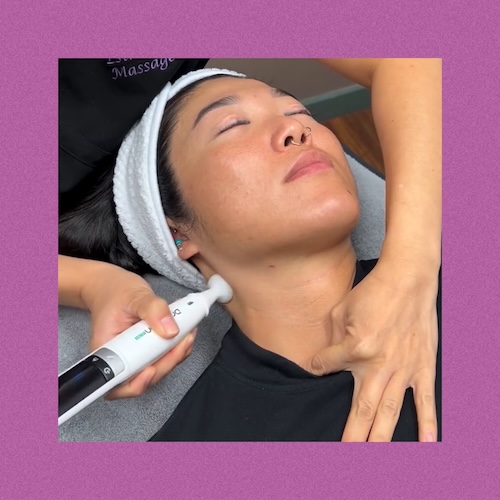
Hyperpigmentation Cold Plasma
$ 175.00
add on to a facial $75
Cold atmospheric plasma (CAP) treats hyperpigmentation non-invasively by using reactive oxygen and nitrogen species (RONS) to downregulate melanin production and accelerate epidermal turnover—all without the heat-induced risk of post-inflammatory hyperpigmentation (PIH) common with thermal lasers.
Key Mechanisms for Pigmentation Control
Tyrosinase Inhibition: Cold plasma suppressively modulates tyrosinase activity, the key enzyme responsible for melanin synthesis in melanocytes.
Accelerated Cell Turnover: Speeds up epidermal regeneration to quickly shed pigment-laden keratinocytes from the skin surface.
Enhanced Depigmenting Absorption: Temporarily opens intercellular lipid pathways, allowing topical brighteners (like Vitamin C, Tranexamic Acid, or Niacinamide) to penetrate up to 60 times deeper.
Zero Heat / Thermal Safety: Unlike traditional resurfacing lasers, CAP operates at room temperature, making it safe for deeper skin tones (Fitzpatrick IV–VI) that are prone to thermal-induced PIH.
Hyperpigmentation Types Treated
| Condition | CAP Effectiveness | Mechanism |
| Post-Inflammatory Hyperpigmentation (PIH) | High | Calms lingering inflammation while dispersing dark spots left by acne or trauma. |
| Sun Damage / Solar Lentigines | Moderate | Accelerates shedding of superficial sun spots when paired with brightening actives. |
| Melasma | High (Safe Alternative) | Targets pigment non-thermally, preventing the heat spikes that typically trigger melasma flare-ups. |
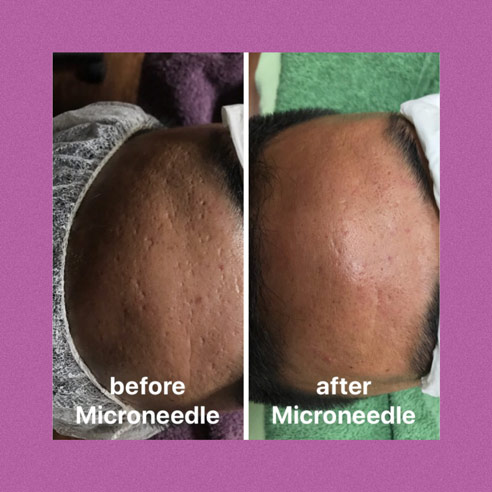
Classic Microneedling for Hyperpigmentation
$ 175.00
Classic microneedling treats hyperpigmentation by accelerating cell turnover to shed melanin-laden keratinocytes and opening micro-channels for deep transdermal delivery of brightening actives—all without the heat-induced risk of post-inflammatory hyperpigmentation (PIH).
How Classic Microneedling Fades Pigment
Disperses Melanin Clusters: Physical micro-punctures break up dense clusters of melanin deposited in the basal and epidermal layers.
Accelerated Pigment Shedding: Triggers rapid cellular renewal, forcing hyper-pigmented epidermal cells to rise to the surface and shed faster than normal.
Transdermal Actives Delivery: Micro-channels allow topically applied pigment inhibitors (such as Tranexamic Acid, Vitamin C, Niacinamide, or Glutathione) to penetrate directly into the basal layer where melanocytes reside.
Non-Thermal Safety: Unlike high-heat lasers or intense heat-based treatments, mechanical microneedling produces zero thermal energy, making it safe for deeper skin tones (Fitzpatrick IV–VI) that easily trigger rebound PIH when exposed to heat.
Treatment Profile
| Feature | Details |
| Primary Indication | Post-Inflammatory Hyperpigmentation (PIH), sun spots, and uneven skin tone |
| Needle Depth | Shallow to mid-depths (0.5 mm–1.0 mm to target the basal layer without triggering inflammation) |
| Downtime | 24 to 48 hours of mild flushing/redness (resembles a light sunburn) |
| Recommended Series | 3 to 6 sessions spaced 4 to 6 weeks apart |
| Melasma Precaution | Must be used at conservative depths paired with active pigment inhibitors to avoid triggering hormonal melanocytes |
$175/treatment, $450 for a package of 3 treatments