Service Categories
Classic Microneedling
$ 175.00
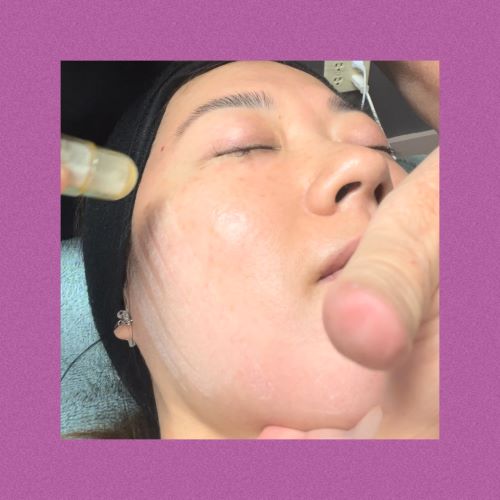
Microneedling, also known as collagen induction therapy, is a popular cosmetic procedure that uses a device with tiny, sterile needles to create controlled micro-injuries in the skin. This process stimulates the body's natural wound-healing response, which leads to the production of new collagen and elastin.
How it Works
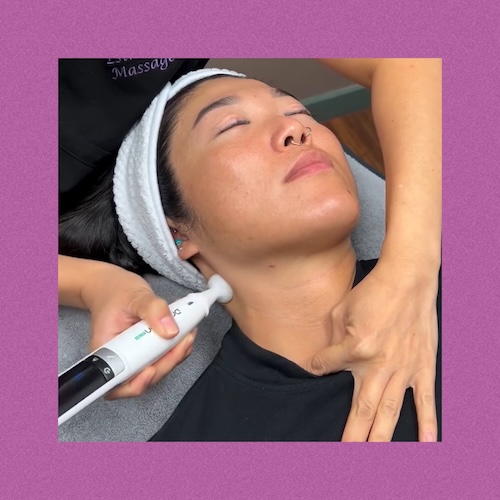
The procedure involves a handheld device, often shaped like a pen or a roller, that is passed over the skin. The needles on the device puncture the skin's outermost layers, creating microscopic channels. These controlled "micro-wounds" are not visible to the naked eye and do not cause significant damage. However, the skin's repair mechanisms are triggered, initiating a cascade of events:
Inflammatory Response: The micro-injuries signal the body to send blood, growth factors, and other healing components to the area.
Proliferation: The skin begins to produce new collagen and elastin, which are the fundamental proteins that give skin its firmness, elasticity, and smooth texture.
Remodeling: Over time, the new collagen and elastin mature and contract, leading to a tightening and smoothing of the skin.
Common Uses and Benefits
Microneedling is a versatile treatment used to address a wide range of skin concerns, including:
Acne Scars: It can help to break up and remodel scar tissue, making pitted acne scars appear less noticeable.
Fine Lines and Wrinkles: By stimulating new collagen, it helps to plump and firm the skin, reducing the appearance of wrinkles.
Uneven Skin Tone and Texture: It can improve the overall texture of the skin, making it feel smoother, and can help to fade hyperpigmentation and sun damage.
Enlarged Pores: The collagen-building process helps to tighten the skin around pores, making them appear smaller.
Stretch Marks: Microneedling can be used to improve the texture and color of stretch marks.
Improved Product Absorption: The micro-channels created during the procedure allow topical skincare products (like serums) to penetrate more deeply into the skin, making them more effective.
What to Expect and Aftercare
Before the procedure, a numbing cream is typically applied to the skin to minimize discomfort. The treatment itself is relatively quick, often lasting about 30 minutes to an hour, depending on the area being treated.
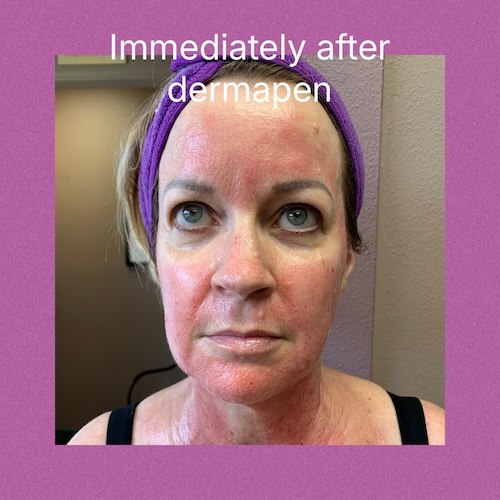
After a session, the skin will be red, swollen, and may feel tight or sensitive, similar to a mild sunburn. This usually subsides within a few days. Post-treatment care is crucial for proper healing and involves:
Avoiding direct sun exposure and using a high-SPF sunscreen.
Using gentle, hydrating cleansers and moisturizers.
Avoiding makeup and active ingredients (like retinoids) for a specific period, as advised by your provider.
For best results, a series of 3 to 6 treatments, spaced a few weeks apart, is typically recommended.
Professional vs. At-Home Devices
It's important to distinguish between professional microneedling treatments and at-home rollers. Professional devices are motorized and can be adjusted to penetrate the skin at a deeper, more precise level, leading to more significant and reliable results. At-home rollers use shorter needles and are primarily used for exfoliation and improving product absorption, with much less effect on collagen production. They also carry a higher risk of infection if not properly cleaned. It is always recommended to seek a professional, such as a board-certified dermatologist or a licensed esthetician, for microneedling procedures to ensure safety and effectiveness.
Our classic microneedle is a less intense version than the Ellite Microneedle.
Cold Plasma
$ 175.00
How it works
Cold plasma, also known as Nonthermal Atmospheric Pressure Plasma (NTAPP), is a cutting-edge, non-invasive technology used in dermatology and aesthetic medicine. It is a "cool" ionized gas that is safe for direct application to the skin without causing thermal damage.
The technology works by applying a low-frequency electrical current to a noble gas or ambient air, which generates a stream of reactive oxygen and nitrogen species (RONS). When this ionized gas comes into contact with the skin, it does not burn the surface. Instead, the reactive species trigger a series of beneficial biological processes:
Cellular stimulation
The RONS act as signaling molecules that prompt skin cells to regenerate and repair themselves. This process stimulates the production of vital proteins like collagen and elastin, as well as hyaluronic acid, which are essential for maintaining skin firmness and hydration.
Antimicrobial action
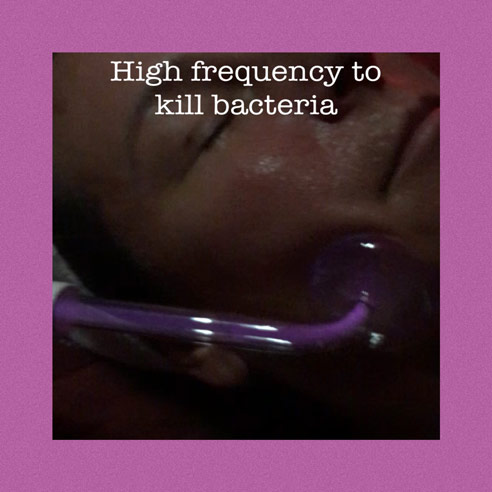
Cold plasma has potent antibacterial properties. It effectively destroys bacteria, fungi, and viruses on the skin's surface, including the bacteria responsible for causing acne (P. acnes).
Increased product absorption
Cold plasma can temporarily disrupt the skin's natural barrier, creating microscopic channels that allow topical skincare products to penetrate deeper and work more effectively. This process is often called "transdermal delivery."
Anti-inflammatory and calming effects
The reactive species help to modulate inflammation, reducing redness and soothing irritated skin.
Key features and benefits
Acne and blemish control
Cold plasma is highly effective for treating acne due to its powerful antimicrobial properties, which kill acne-causing bacteria. It also helps to regulate oil production and reduce the inflammation associated with breakouts.
Anti-aging and skin rejuvenation
By stimulating collagen and elastin production, cold plasma helps to tighten and firm the skin, reduce the appearance of fine lines and wrinkles, and improve overall skin texture and elasticity.
Hyperpigmentation and uneven skin tone
The treatment can promote cellular turnover and helps to break up excess melanin, which can lead to a reduction in dark spots, sun spots, and melasma.
Soothes inflammatory conditions
Its anti-inflammatory effects make it a suitable treatment for individuals with conditions like rosacea and dermatitis, helping to calm and soothe the skin.
Non-invasive with no downtime
The procedure is painless and does not damage the skin's surface. There is typically no recovery time, allowing you to return to your daily activities immediately.
Enhanced skincare routine
The ability of cold plasma to improve product absorption means that it can make your at-home skincare products, particularly serums and moisturizers, more potent and effective.
Crystal Microdermabrasion
$ 175.00
How it Works
Microdermabrasion is a non-invasive cosmetic procedure that provides deep exfoliation. It works by gently "sanding" or "buffing" away the outermost layer of dead, dull skin cells. There are two primary types of microdermabrasion:
Crystal Microdermabrasion: This method uses a hand-held device that sprays fine, abrasive crystals (such as aluminum oxide or sodium bicarbonate) onto the skin. The crystals, along with the exfoliated skin cells, are immediately suctioned away by a vacuum attached to the same device.
This procedure removes the stratum corneum, which is the top layer of the epidermis. By doing so, it triggers the skin's natural repair process, encouraging the production of new, healthier skin cells and boosting the synthesis of collagen and elastin, the proteins responsible for skin firmness and elasticity.
Key Features and Benefits
Improved Skin Texture and Tone: The removal of dead skin cells reveals a smoother, softer, and more even complexion. It can significantly improve the appearance of rough skin, fine lines, and sun damage.
Reduces Signs of Aging: By stimulating collagen production, microdermabrasion helps to reduce the appearance of fine lines and shallow wrinkles, giving the skin a more youthful and plump appearance.
Minimizes Acne Scars and Discoloration: The treatment can effectively lessen the appearance of mild acne scars, as well as hyperpigmentation, age spots, and sun spots, by removing the superficial layer of discolored cells.
Pore Refinement: The vacuum suction and exfoliation work together to clean out and reduce the appearance of enlarged or clogged pores.
Enhanced Product Absorption: With the outermost layer of dead skin removed, skincare products like serums and moisturizers can penetrate deeper into the skin, making them far more effective.
Non-Invasive with No Downtime: Microdermabrasion is a gentle procedure that is generally painless. It requires no downtime, allowing you to return to your daily activities immediately after the session. Any minor redness typically subsides within a few hours.
Chemical Peels
$ 125.00
How it works
A chemical peel is a cosmetic procedure that involves applying a chemical solution to the skin to cause a controlled exfoliation. The solution's ingredients—which can include alpha-hydroxy acids (AHAs), beta-hydroxy acids (BHAs), or trichloroacetic acid (TCA), among others—work by dissolving the bonds that hold dead skin cells together. This process removes the outermost layers of the epidermis, and in some cases, parts of the dermis, depending on the peel's strength.
Chemical peels are categorized by their depth:
Superficial Peels: The mildest type, these peels use gentle acids (like glycolic or salicylic acid) to exfoliate only the outermost layer of the skin. They are often used for a quick refresh and have minimal to no downtime. We do these frequently.
Medium Peels: These peels use stronger acids (such as TCA) to penetrate deeper into the skin, reaching the upper part of the dermis. They are effective for more pronounced skin issues but require more downtime, typically a week or more. We do these less often.
Deep Peels: The most aggressive type, deep peels use powerful chemicals (like phenol) to penetrate deeply into the dermis. They are used to treat severe skin concerns but have significant downtime and are only performed once. These should be done in a doctor's office.
By removing the damaged outer layers, the treatment triggers the skin's natural healing and regenerative response. This stimulates the production of new skin cells, as well as collagen and elastin, which are essential for maintaining the skin's structure and elasticity.
Key features and benefits
Improved skin texture and tone: Peels reveal the fresh, new skin underneath, resulting in a smoother, softer texture and a more even, radiant complexion.
Reduced fine lines and wrinkles: By boosting collagen production, medium and deep peels can significantly reduce the appearance of fine lines and wrinkles, giving the skin a more youthful appearance.
Acne treatment and scar improvement: Salicylic acid peels are particularly effective for treating acne by unclogging pores and reducing inflammation. Peels can also help to fade acne scars and post-inflammatory hyperpigmentation.
Reduced sun damage and hyperpigmentation: Chemical peels are a highly effective treatment for fading sun spots, age spots, melasma, and other forms of discoloration.
Addresses multiple concerns at once: A single peel can address a variety of skin issues, including uneven tone, sun damage, and textural irregularities, making it a versatile and efficient treatment.
Variety of strengths: With options ranging from superficial to deep, chemical peels can be customized to match your specific skin type, concerns, and desired recovery time.
Cleansing Facial
$ 135.00
How it works
We do cleansing facials, which is a foundational skincare treatment designed to thoroughly purify the skin. The primary goal is to unclog pores, remove impurities, and prepare the skin for better product absorption. It's often the first step in a more advanced skincare regimen and is suitable for most skin types, especially those prone to congestion and breakouts.
The procedure typically involves several key steps:
Skin analysis and consultation: The esthetician begins by examining your skin to identify your specific needs, such as oiliness, dryness, or sensitivity, and to determine the best products and techniques to use.
Double cleansing: The facial starts with a two-step cleansing process. The first cleanse removes makeup and surface-level dirt, while the second cleanse goes deeper to remove any remaining impurities and prepare the skin for exfoliation.
Exfoliation: A gentle exfoliant (either a manual scrub or a chemical exfoliant like an enzyme or a mild acid) is applied to remove the outer layer of dead skin cells. This step reveals fresh, new skin and helps to prevent clogged pores.
Steam and extraction: Steam is used to soften the skin and open up pores, making it easier to perform extractions. The esthetician then manually and safely removes blackheads, whiteheads, and other impurities from the pores.
Face massage and mask: A mask tailored to your skin type is applied to soothe, hydrate, or detoxify the skin.
Toning and protection: The facial concludes with the application of a toner to balance the skin's pH, followed by a moisturizer and a broad-spectrum sunscreen to hydrate and protect the newly cleansed skin.
Key features and benefits
Deep pore cleansing: The most significant benefit is the thorough removal of dirt, oil, and impurities that accumulate in the pores, which is difficult to achieve with at-home cleansing alone.
Reduced breakouts: By unclogging pores and removing bacteria, a cleansing facial helps to prevent acne and reduce the severity of existing breakouts.
Improved skin texture and tone: The exfoliation process sloughs away dead skin cells, leaving the skin smoother, softer, and more radiant.
Enhanced product absorption: With a clean and exfoliated surface, the skin is better able to absorb the active ingredients in your daily skincare products, making them more effective.
Detoxification: The combination of cleansing, steam, and a purifying mask helps to draw out toxins and excess oil, leaving the skin feeling refreshed and revitalized.
Promotes relaxation: The facial massage and serene environment of a spa can help to reduce stress and improve overall well-being.
Pores appear smaller: When the pores are cleaned out, you don't notice them as much.
Microneedling with Radio Frequency
$ 300.00
Microneedling with radiofrequency (RF) is a popular and effective dual-modality cosmetic treatment that combines two powerful skin rejuvenation techniques into one session. It's often referred to as RF microneedling and has gained popularity for its ability to deliver significant results with minimal downtime.
How it Works
The treatment uses a specialized device that has a head with multiple fine, sterile needles. The procedure involves:
Microneedling Component: The needles are precisely inserted into the skin, creating tiny, controlled micro-injuries or "channels." This process, known as collagen induction therapy, triggers the body's natural wound-healing response. The skin begins to produce new collagen and elastin, the essential proteins that provide skin with its firmness and elasticity.
Radiofrequency (RF) Component: Simultaneously, as the needles are in the skin, they emit radiofrequency energy. This energy generates heat in the deeper layers of the dermis, known as the reticular layer. The heat causes a "thermal injury" that further stimulates collagen remodeling and production. This targeted heat also helps to tighten existing collagen fibers, resulting in an immediate firming effect.
The unique advantage of this combination is that the RF energy is delivered directly into the dermis, bypassing the skin's surface (epidermis). This means that the treatment can provide significant tightening and collagen-building effects without the risk of thermal damage or hyperpigmentation that can sometimes occur with laser treatments, especially on darker skin tones.
Key Features and Benefits
Superior Skin Tightening and Firming: The combination of microneedling and RF energy provides a powerful synergistic effect. The thermal energy from the RF component causes a deeper and more significant tightening and firming effect compared to traditional microneedling alone.
Reduced Fine Lines and Wrinkles: By promoting the growth of new collagen and elastin, the treatment helps to smooth out fine lines and wrinkles, restoring a more youthful texture to the skin.
Improved Scarring: RF microneedling is highly effective for improving the appearance of acne scars and other types of textural irregularities. The heat helps to remodel scar tissue, while the new collagen fills in depressions.
Reduced Pore Size: The treatment can help to shrink enlarged pores, leading to a smoother and more refined skin texture.
Treats Multiple Areas: While most commonly used on the face, RF microneedling can also be used to treat the neck, chest, and other body areas to address sagging skin, stretch marks, and scars.
Minimal Downtime: The procedure is considered minimally invasive. While you may experience some redness, swelling, or a "sunburn" sensation for 1-3 days, most people can resume their normal activities quickly.
Safe for All Skin Tones: Unlike many laser treatments that carry a risk of post-inflammatory hyperpigmentation for darker skin types, RF microneedling is generally safe and effective for all skin tones because the RF energy is delivered beneath the surface of the skin.
Elite Microneedle with PRP
$ 600.00
Microneedling with PRP (Platelet-Rich Plasma) is a popular and advanced cosmetic procedure that combines two powerful treatments to enhance skin rejuvenation.
The Two-Part Process
The procedure combines the collagen-inducing effects of microneedling with the regenerative properties of PRP.
Part 1: The PRP Extraction
Blood Draw: A small amount of blood is drawn from the patient's arm, similar to a standard blood test.
Centrifugation: The blood is placed in a centrifuge machine, which spins it at a high speed.
Separation: The centrifugation process separates the blood into its different components. The red blood cells sink to the bottom, while a golden liquid layer, which is the Platelet-Rich Plasma, rises to the top. The PRP is a concentrated source of platelets, growth factors, and other proteins that are essential for healing and tissue regeneration.
Part 2: The Microneedling and Application of PRP
Microneedling: A microneedling device (like a DermaPen) is used to create thousands of microscopic channels in the skin. This triggers the body's natural wound-healing response and stimulates the production of new collagen and elastin.
Application of PRP: As the microneedling is performed, the extracted PRP is applied topically to the skin. The micro-channels created by the needles allow the PRP to penetrate deep into the dermal layers, where it can deliver its powerful growth factors directly to the cells that need them most.
The Benefits of Combining Microneedling and PRP
While both microneedling and PRP are effective on their own, combining them creates a synergistic effect that significantly enhances the results. The PRP acts as a natural booster for the microneedling process, leading to:
Accelerated Healing: The growth factors in the PRP speed up the skin's natural healing and regenerative processes.
Enhanced Collagen Production: PRP provides a potent dose of growth factors that supercharge the collagen induction process initiated by microneedling. This can lead to more dramatic improvements in skin firmness and elasticity.
Improved Skin Tone and Texture: The combination is highly effective at improving a wide range of concerns, including acne scars, fine lines, wrinkles, and uneven pigmentation.
Natural and Safe: Since the PRP is sourced from the patient's own blood, there is virtually no risk of allergic reaction or rejection.
What to Expect and Aftercare
The procedure is performed in a clinical setting by a qualified professional. A topical numbing cream is usually applied before the treatment to ensure comfort. After the treatment, the skin will be red and may feel sensitive, similar to a sunburn. This redness and swelling can last for 24 to 72 hours.
Aftercare is crucial and often includes:
Avoiding direct sun exposure and using a broad-spectrum sunscreen.
Keeping the skin clean and hydrated with gentle products.
Avoiding makeup for at least 24 hours.
For optimal and long-lasting results, a series of 3 to 6 treatments, spaced a few weeks apart, is typically recommended.
Elite MDerma Microneedling by DermaPen
$ 300.00
How DermaPen Works
The DermaPen device is a small, handheld, motorized tool with a sterile, single-use needle cartridge on the tip. The needles rapidly move up and down, puncturing the skin vertically as the device is glided across the treatment area. The key features that make a DermaPen distinct from traditional microneedling rollers include:
Vertical Stamping: The needles enter the skin at a perpendicular angle, which creates clean, precise channels without tearing or scraping the skin. Traditional rollers often enter the skin at a curve, which can cause more trauma and pain.
Adjustable Needle Depth: The depth of the needles can be precisely adjusted by the practitioner, allowing them to customize the treatment for different skin concerns and areas of the face and body. This is crucial for safely treating delicate areas like around the eyes or lips, as well as for targeting deeper issues like acne scars.
Controlled and Consistent: The automated, consistent motion of the DermaPen provides a more uniform treatment than manual rollers, ensuring that the entire area receives the same level of micro-injury.
What It's Used For
The micro-injuries created by the DermaPen trigger the body's natural healing response. This process stimulates the production of new collagen and elastin, which are essential for skin firmness, elasticity, and overall health. As a result, DermaPen is used to treat a wide range of skin concerns, including:
Acne Scars: It helps to break down old scar tissue and stimulate new, healthy tissue to fill in pitted scars.
Fine Lines and Wrinkles: The increased collagen production helps to plump the skin and reduce the appearance of wrinkles.
Hyperpigmentation and Sun Damage: It can help to break up and fade dark spots and uneven skin tone.
Enlarged Pores: By stimulating collagen, it can help to tighten the skin around pores, making them appear smaller.
Stretch Marks: It can improve the texture and appearance of stretch marks by promoting new collagen growth in the affected area.
Improved Product Absorption: The micro-channels created by the needles allow topical products, like serums and growth factors, to penetrate much more deeply into the skin, significantly enhancing their effectiveness.
The Procedure and Recovery
A DermaPen procedure is typically performed in a clinic or a medical spa by a trained professional. A numbing cream is applied to the treatment area beforehand to minimize discomfort. The skin will be red, and may feel warm and tight for a day or two after the treatment, similar to a mild sunburn. The full results of the treatment, as new collagen forms, become visible over the course of several weeks to months. Multiple sessions are usually recommended for optimal results.
This is the strongest of our microneedling treatments.