




Service Categories
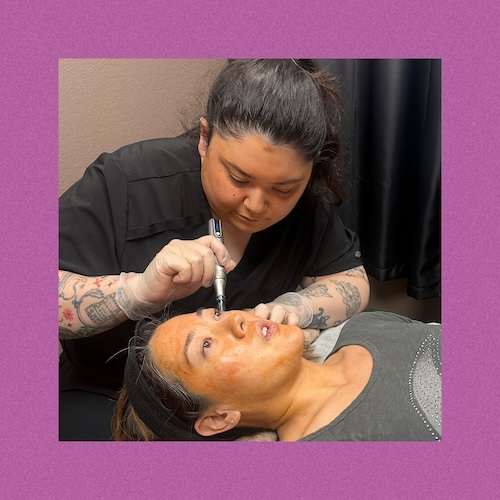
PDRN and Exosome Treatment
$ 300.00
$300 (30-45 min)
Each treatment includes:
Cleansing
A PDRN serum that helps repair damaged tissue
An AHA, BHA, PHA peel with PDRN to exfoliate, repair and regenerate
Applying exosomes (same exosomes as previously)
Applying Promoter Volumizing Gel w/PDRN and PLLA. PLLA is in our No Needle Firming Facial. This helps to plump and repair.
TMP - muscle stimulator, LED, and ultrasound to tighten and firm
PDRN (Polydeoxyribonucleotide) is a DNA-derived biological compound widely used in regenerative medicine and clinical skincare. It consists of purified DNA fragments that mirror human DNA (over 95% similarity), making it highly bio-compatible with minimal risk of irritation.
Traditionally extracted from salmon sperm/milt DNA due to its molecular structure—though modern formulations also feature lab-grown or botanical micro-DNA versions—PDRN operates at a cellular level. Instead of just staying on top of the skin, it binds to adenosine receptors to jumpstart cellular repair pathways.
Key Benefits for the Skin
Accelerated Cell Regeneration & Repair: PDRN supplies the literal nucleotide building blocks needed to repair damaged tissue and rebuild a compromised skin barrier. It is frequently used to speed up recovery after microneedling, laser therapies, or chemical peels.
Collagen & Elastin Stimulation: It wakes up sluggish fibroblast cells, signalling them to synthesize fresh collagen and elastin. Over time, this restores skin density, improves firmness, and smooths fine lines.
Anti-Inflammatory & Soothing: It suppresses inflammatory pathways, making it effective for calming redness, sensitivity, acne marks, and rosacea.
Improved Circulation & Radiance: PDRN promotes angiogenesis (the formation of tiny new blood vessels), which improves nutrient supply and microcirculation to skin tissue—giving the skin a healthy "glass skin" glow.
Hyperpigmentation Reduction: Clinical studies suggest PDRN inhibits excess melanin synthesis, helping to fade post-inflammatory hyperpigmentation (PIH) and even out to
Exosome skin therapy represents a major leap in regenerative aesthetics, using stem-cell-derived extracellular vesicles to send targeted signals directly to aging or damaged skin cells.
How Exosomes Work
Exosomes are acellular nanoparticles (30–200 nm in size) packed with growth factors, peptides, mRNA, and lipids. Rather than relying on live cells, exosomes act as cellular messengers:
Micro-Channel Delivery: Applied topically following light microneedling or fractional lasers, allowing the serum to bypass the outer stratum corneum and reach deeper dermal layers.
Fibroblast Activation: Signaling molecules "wake up" dormant dermal fibroblasts to trigger natural synthesis of collagen and elastin.
Anti-Inflammatory Signaling: Downregulates inflammatory cascades, drastically slashing post-procedure downtime and soothing erythema.
At A Glance: Exosomes vs. Traditional Treatments
| Feature | Exosome Therapy | |
| Source | Purified, human stem-cell-derived vesicles | |
| Potency | Higher, standardized growth factor concentration | |
| Primary Mechanism | Direct cell-to-cell signaling | |
| Blood Draw Required | No | |
| Best For | Anti-aging, hyperpigmentation, scar repair, post-laser recovery | |
Key Benefits & Indications
Accelerated Healing: Significantly speeds up recovery time when paired with invasive procedures like RF microneedling or CO2 lasers.
Textural Repair: Smooths fine lines, tightens mild skin laxity, and softens atrophic acne scars.
Pigment & Tone Correction: Helps regulate melanocyte activity to minimize post-inflammatory hyperpigmentation (PIH) and sun damage.
High Safety Profile: Because exosomes are acellular nanoparticles rather than intact live stem cells, they carry negligible risk of host rejection or graft-versus-host response.